
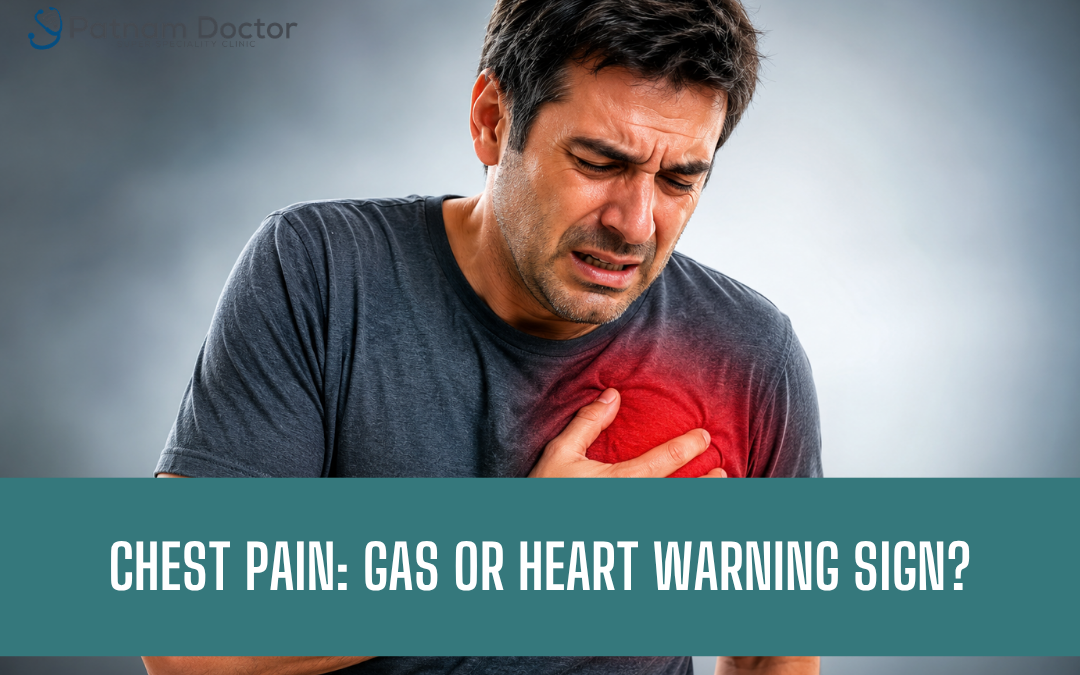
Cardiac pain and non-cardiac pain can feel nearly identical, and no symptom combination reliably rules out a heart cause without clinical assessment. Cardiac chest pain typically presents as pressure or heaviness behind the breastbone, sometimes radiating toward the left arm or jaw. Gas pain tends to be sharper, more localised, and usually improves after burping or a change in position. That distinction alone is not sufficient to act on safely.
According to the cardiologist at Patnam Doctor super speciality clinic in Nalgonda, Patients come in having taken antacids for three days because they were sure it was gas. Sometimes it is. But I have seen enough ECGs with changes in those same patients to know that assuming is dangerous. Get checked first, treat second.
How Do Cardiac and Gas-Related Chest Pain Actually Differ?
More than half of all chest pain cases at emergency departments turn out non-cardiac. That is a lot of people who were not having a heart attack. But the ones who were having one often did not look dramatically different on arrival.
|
Feature |
Cardiac Chest Pain |
Gas or Non-Cardiac Pain |
|
Character |
Pressure, squeezing, heaviness |
Sharp, cramping, burning |
|
Location |
Substernal, central |
Localised, may shift |
|
Radiation |
Arm, jaw, neck, back |
Rarely radiates |
|
Triggers |
Exertion, emotional stress |
Heavy meals, lying down |
|
Relief |
Rest, nitrates |
Burping, antacids, posture change |
|
Duration |
Typically 5 to 20 minutes |
Variable, may persist for hours |
Onset pattern: Cardiac pain that comes on during a walk and settles with rest should not be explained away as indigestion. Gas tied to a heavy meal with obvious bloating tells a different story.
Associated symptoms: Sweating or dizziness alongside chest discomfort shifts things toward cardiac even when the pain feels mild.
The atypical trap: Women and diabetics often present with fatigue, vague discomfort, or nausea rather than classic pressure, and these get labelled gastrointestinal far more often than they should. Consulting a cardiologist in Nalgonda early prevents these cases from being missed.
What symptoms cannot confirm: An ECG and cardiac enzymes settle the question. No symptom pattern does it on its own.
Which Symptoms Mean You Should Not Wait?
Non-cardiac chest pain is not dangerous in itself, but deciding which category you are in without a clinical assessment is the actual risk.
Radiation to arm or jaw: If the pain moves toward the left arm, shoulder, or jaw during or after exertion, most cardiologists will not attribute it to gas.
Sweating with chest discomfort: Cold sweats alongside chest pain reflect a physiological response the body does not produce for indigestion.
Breathlessness at rest: Gas does not cause breathlessness while sitting still. That combination needs same-day evaluation.
Repeated episodes that resolve: Chest pain that keeps coming and going is not reassuring because it passed. That pattern can mean unstable angina.
Patients wondering what conditions a specialist clinic handles can read the earlier post on early kidney warning signs.
Why Choose Patnam Doctor for Cardiac Evaluation?
Patnam Doctor brings a Consultant Cardiologist from one of Hyderabad’s reputed hospitals to scheduled OPD sessions right here in Nalgonda. Patients receive the same quality of cardiac consultation without the travel, the full day off work, or the wait.
No unnecessary tests. No procedures without a clear clinical reason. Every consultation is focused on providing patients with a direct answer whether the concern is cardiac, what the findings indicate, and what the appropriate next step is. For anyone in Nalgonda seeking dependable cardiac care, Patnam Doctor provides specialist access that is structured, transparent, and scheduled around fixed OPD timings.
Do not ignore recurring chest pain. Consult a cardiologist today.
Frequently Asked Questions
How do I know if my chest pain is gas or a heart problem?
Cardiac pain is typically pressure or tightness that may spread to the arm or jaw. Gas pain is sharp, localised, and gets better with burping or a change in position.
Can gas pain feel exactly like a heart attack?
Yes, gas and acid reflux can closely mimic cardiac pain, which is why an ECG is always needed to rule out a cardiac cause.
What tests confirm whether chest pain is cardiac or non-cardiac?
An ECG, cardiac enzymes, and echocardiogram are the standard tests a cardiologist uses to confirm or rule out a heart cause.
When should chest pain be treated as a medical emergency?
Chest pain with sweating, left arm radiation, jaw pain, breathlessness, or sudden onset needs immediate emergency evaluation.
References
- Acosta RD et al. Diagnosis and Management of Noncardiac Chest Pain
- Fass R, Achem SR. Noncardiac Chest Pain: Epidemiology, Natural Course and Pathogenesis
Disclaimer: The information shared in this content is for educational purposes only and not for promotional use.